Showing posts with label Music. Show all posts

Tuesday, 21 January 2020

Glory - from the soundtrack of Selma


And the performance at the Academy Awards


The Selma to Montgomery marches were three protest marches, held in 1965, along the 54-mile (87 km) highway from Selma, Alabama to the state capital of Montgomery. The marches were organized by nonviolent activists to demonstrate the desire of African American citizens to exercise their constitutional right to vote, in defiance of segregationist repression; they were part of a broader voting rights movement underway in Selma and throughout the American South. By highlighting racial injustice, they contributed to passage that year of the Voting Rights Act, a landmark federal achievement of the civil rights movement.

The song, written for the soundtrack of the Film "Selma" is outstanding any way you look at it.  Inspirational, motivational and emotional, the song is one of the best of the best.


Friday, 15 November 2019

Fwd: SPECIAL NEWSLETTER FROM TWM


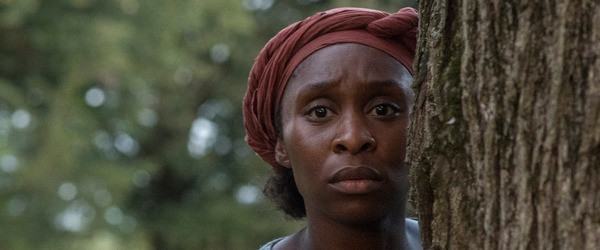
Suggest that your students, grades 7 - 12, see the movie Harriet - now in theaters. We are preparing a Learning Guide to the film which will be completed by Thursday, November 7. The first two sections of the Guide discuss the importance of this story to the history of America for the period 1849 - 1865.

Description:  

Harriet Tubman was without doubt one of America's greatest heroes. Her courage, ingenuity, and tenacity enabled her to escape from slavery in 1849. She then became a conductor for the Underground Railroad. With a price on her head and facing certain torture and death if she were caught, Harriet Tubman went back into the South 13 times freeing the rest of her family and many other slaves. It is estimated that she shepherded some 70 slaves to freedom.

This film is well-grounded historical fiction, giving a sense of the times and providing a reasonably accurate portrayal of the almost super-human exploits of its heroine.


Benefits of the Movie:

Not only does Harriet tell the story a black female role model, it also demonstrates the humanitarian vision of hundreds of thousands of Americans, black and white, who worked to end slavery. It is accurate to call slavery the original sin of the United States. However, it is also true that before and during the Civil War Americans by the hundreds of thousands put their lives and livelihoods at risk to eradicate this great evil. They did this with no thought of reward but in the hope of redeeming the promise of the Declaration of Independence and the soul of the country itself. (Can anyone imagine the U.S. playing its role in WW I, WW II, and the Cold War if slavery had still existed?) While it is a tragedy that the hopes of African-Americans for equality were frustrated by the hundred years of Jim Crow and the continuing discrimination suffered by some black Americans must be rooted out and extirpated, the idealism and sacrifice of those who worked to end slavery is an important chapter in American history. Harriet Tubman was one of the foremost of those brave women and men whose moral vision and humanitarian spirit inspired them to fight for the end of slavery.

TeachwithMovies.org, November, 2019.
TeachWithMovies.com, Inc., 1717 4th Street 3rd Floor, Santa Monica, CA 90401, United States
You may unsubscribe or change your contact details at any time.

Monday, 30 September 2019

Millworker


Millworker
Now my grandfather was a sailor.

He blew in off the water.

My father was a farmer
And I his only daughter.
Took up with a no good

Millworking man from Massachusetts

Who died from too much whiskey
And leaves me these three faces to feed.
Millwork ain't easy, millwork ain't hard.

Millwork, it ain't nothin'

But an awful, boring job.
I'm waiting for a daydream
To take me through the mornin';
Put me in my coffee break
Where I can have a sandwich and remember.
And it's me and my machine

For the rest of the mornin',

For the rest of the afternoon,
For the rest of my life.
Now my mind begins to wander

To the days back on the farm.

I can see my father smilin'
And me swingin' on his arm.
I can hear my granddad's stories

Of the storms out on Lake Erie,

Where vessels and cargos
And fortunes and sailor's lives were lost.
Yeah, but it's my life that's been wasted.

And I have been the fool

To let this manufacture
Use my body for a tool.
As I ride home in the evenin'
I'm staring at my hands,
Swearin' by my sorrow
That a young girl ought to stand a better chance.
Oh, but may I work the mills

Just as long as I'm able,

And never meet the man
Who's name is on the label.
Whoa, it's me and my machine

For the rest of the mornin',

For the rest of the afternoon,
For the rest of my life . . . wasted.
Source: LyricFind
Songwriters: James Taylor